Coaching Client Experience: How to Create a Memorable Journey That Clients Don't Forget
Learn how to design a better coaching client experience, from onboarding and trust-building to breakthroughs, milestones and the transformation that lasts.
By Gopal Krishnan, India's Unicorn Maker
Build your ₹1 Crore coaching business with the 1 Crore Coach Plan
Learn the niche, offer, content and AI systems that let you scale without doing every task yourself. Free seat, limited slots.
Reserve My Free SeatWhat do your clients remember after their coaching programme ends? The workbook? The number of sessions? The framework you spent months developing? Probably not.
The moments that stay with people are often much simpler:
- A question that changed how they thought.
- A conversation that gave them clarity.
- The moment they realised they were capable of something they had been avoiding.
- The encouragement they received when they wanted to quit.
- The first milestone they celebrated.
- The feeling that someone genuinely understood them.
This is why coaching client experience deserves as much attention as coaching methodology. A strong coaching programme does not only deliver information and outcomes. It creates a journey, and that journey influences how clients perceive, remember and recommend your coaching.
What Is Coaching Client Experience?
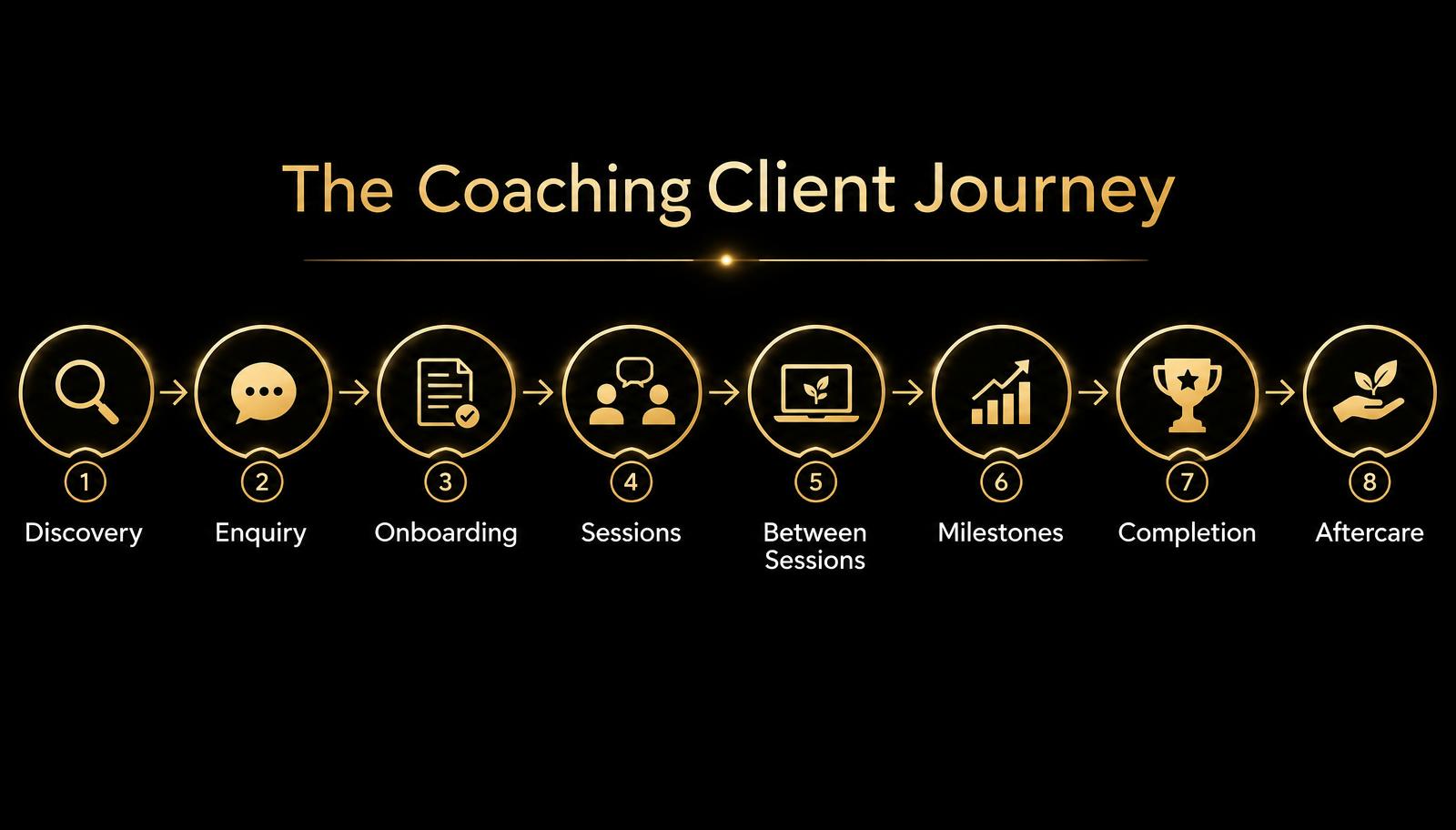
Coaching client experience is the complete experience a client has with you before, during and after a coaching programme. It includes much more than the session itself:
- How they discover you
- What they feel when they first contact you
- How clearly you explain your process
- What happens after they sign up and how they are onboarded
- How supported they feel between sessions
- How you recognise progress and handle breakthroughs
- How the programme ends and what happens after
Your coaching experience is not a collection of sessions. It is the entire client journey.
Why Client Experience Matters in Coaching
Clients can access information from books, podcasts, courses, communities and AI tools, and they can compare coaches more easily than ever. Expertise remains important, but the experience surrounding it has become a major point of differentiation.
A prospective client is not only thinking "Can this coach help me?" They are also wondering:
- What will it actually be like to work with this person?
- Will I feel understood and supported?
- Will I know what happens next?
- Will I notice progress and feel different by the end?
Clear positioning, a specific transformation and a designed client journey are exactly what we build in the free 1 Crore Coach Plan workshop.
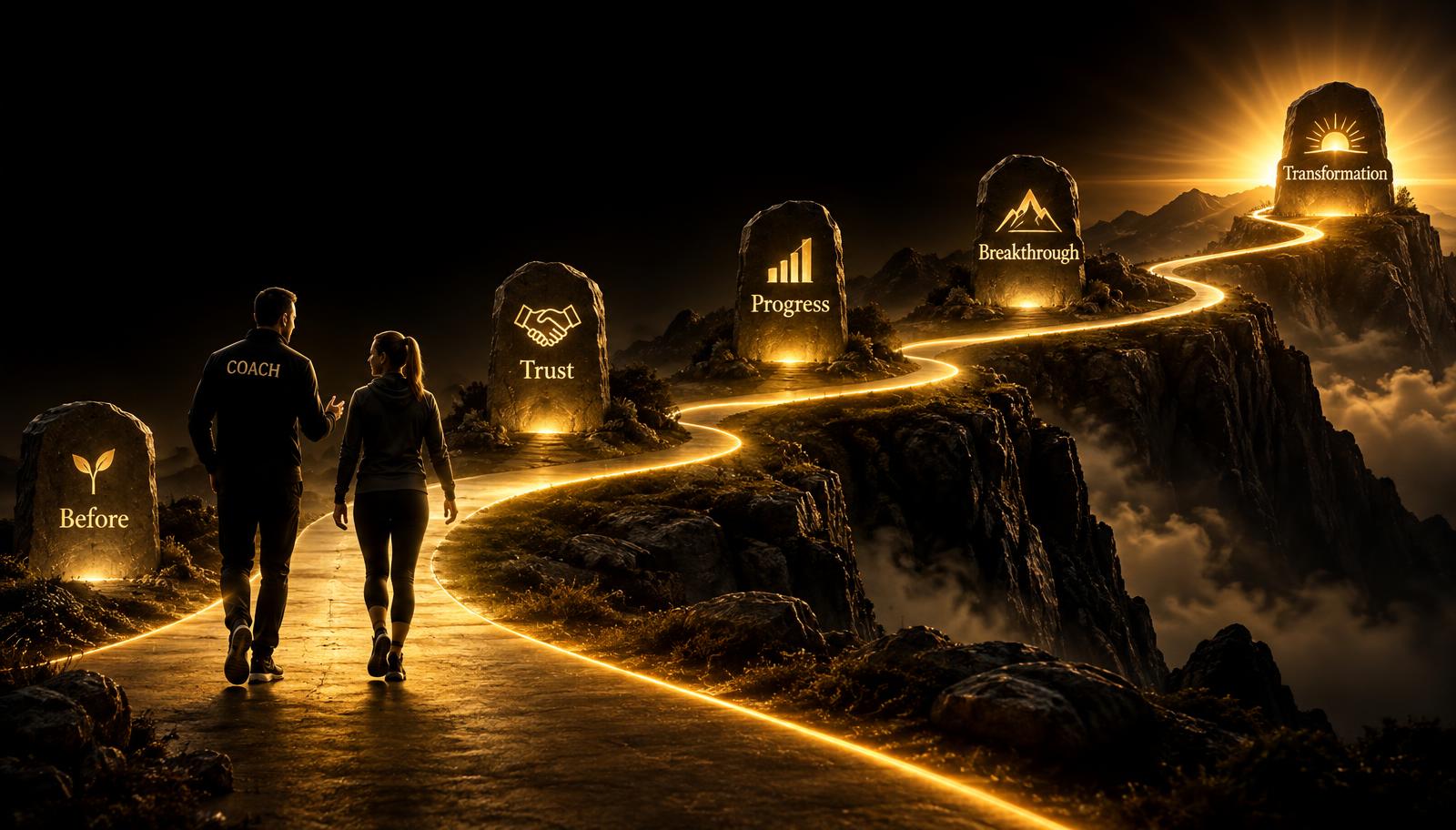
The Coaching Client Journey Starts Before the First Session
Imagine two people buy similar programmes. Coach A sends a payment confirmation and a calendar link. Coach B sends a thoughtful welcome, explains exactly what happens next, shares preparation steps and makes the client feel their journey has already begun. The coaching has not started, but the experience has.
Ask yourself
- What does a new client receive immediately after signing up?
- Do they know what happens next and how to prepare?
- Do they understand what success will look like?
- Do they feel like a transaction, or like someone beginning a meaningful journey?
Stage 1: Create a Strong Before State
Every client arrives confused, frustrated, overwhelmed, stuck, hopeful or afraid of the wrong decision. A coach who immediately starts teaching may miss that emotional context. Before asking "What strategy do we need?", ask "What is this experience currently like for my client?"
Stage 2: Build Trust Through Early Progress
Trust grows through small moments: a useful insight, a quick win, a thoughtful question, a clear action step. These communicate "This process may actually work for me." The goal is not a dramatic first-session breakthrough. It is helping the client experience movement.
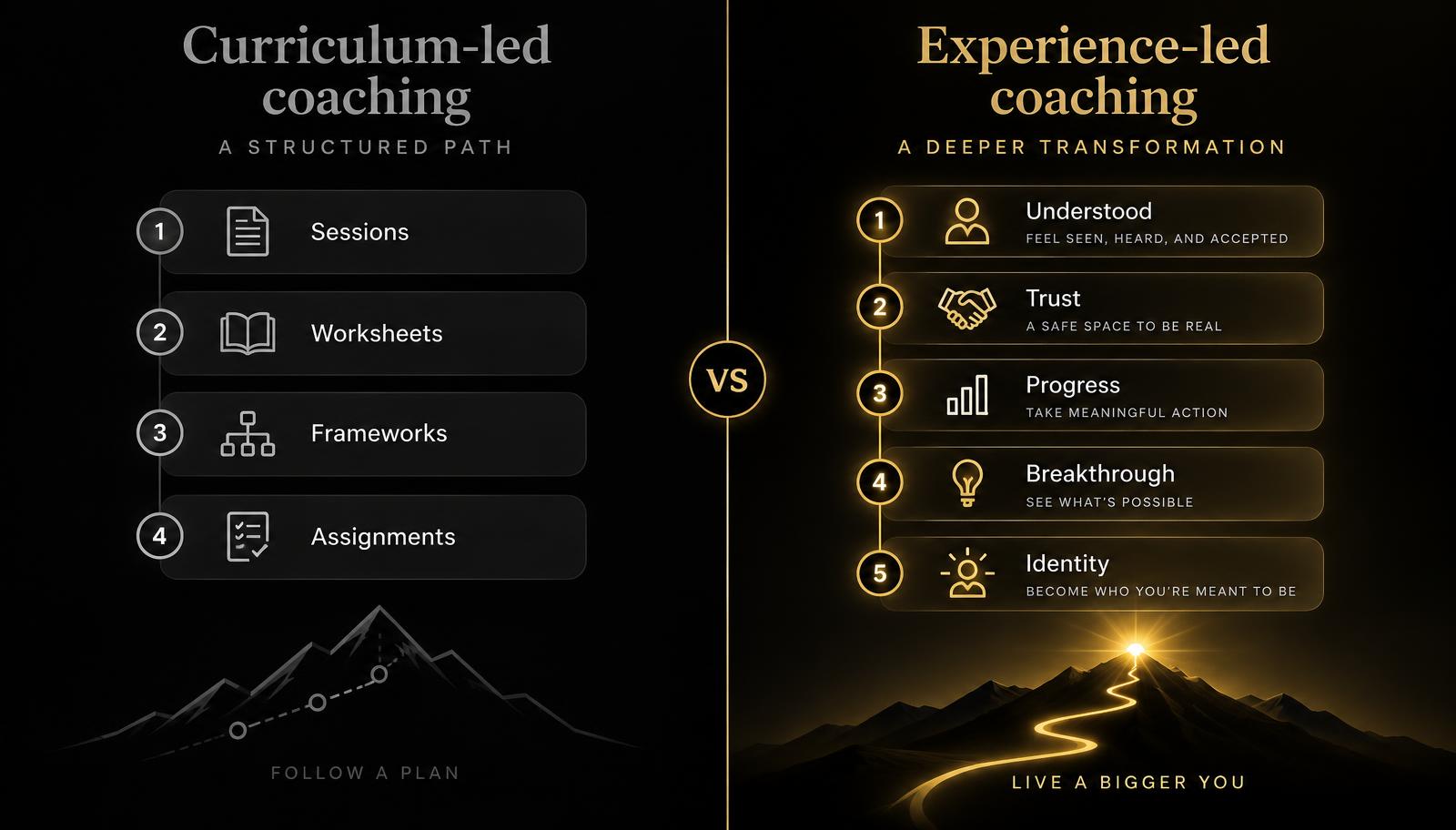
Stage 3: Design the Coaching Experience, Not Just the Curriculum
Coaches often ask "What should I teach next?" Add another question: "What should my client experience next?"
A curriculum might read: Week 1 Assessment, Week 2 Goal setting, Week 3 Strategy, Week 4 Implementation. An experience-led programme reads differently:
- Week 1: "I finally feel understood."
- Week 2: "I can see what has been holding me back."
- Week 3: "I have proof that I can change this."
- Week 4: "I know what I need to do next."
Stage 4: Create Meaningful Milestones
When a client finally takes a meaningful step, do not rush to the next task. Pause, name the progress, reflect it back and celebrate it. Sometimes the most powerful recognition is simply: "Do you realise what you just did differently this time?"
Stage 5: Design for Breakthrough Moments
Transformation is built through many small moments, but most journeys contain defining ones: a decision, a realisation, a new belief, a change in identity. The coach's job is not to force them but to create enough safety, structure and reflection for them to emerge. Often the key question is not on the plan: "You paused there. What happened for you just now?"
Stage 6: Build Identity Into the Experience
The deepest transformation happens when clients describe themselves differently: from "I always procrastinate" to "I know how to move myself into action", from "I'm not a leader" to "I can lead". Symbols, rituals, unique phrases and milestone traditions make that abstract shift feel tangible.
Stage 7: Design the Experience Between Sessions
Clients live most of their lives between sessions. That is where they face resistance and where insights either become habits or disappear. Consider:
- Reflection prompts and progress check-ins
- Small implementation tasks
- Milestone reminders and accountability
- Celebration messages
- Resources delivered at the right moment
The objective is not more content. It is support when the transformation is actually being lived. Many coaches now use AI systems to deliver this at scale; see our guide on AI agents for coaches.
Stage 8: Create a Memorable Ending
Many programmes simply stop. Instead, create a deliberate completion moment. Review where the client started, compare it with where they are now, and ask what they can now do that they could not before. Most importantly, help the client recognise who they have become.
The 5-Part Transformation Design Engine
A useful way to review any coaching programme is through five stages:
- 1. Before State: what is the client experiencing before they begin?
- 2. Trust Bridge: what experiences help them believe change is possible?
- 3. Transformation Experience: how do they experience the coaching process?
- 4. Breakthrough Moments: where do they experience meaningful shifts?
- 5. After Identity: how do they see themselves differently at the end?
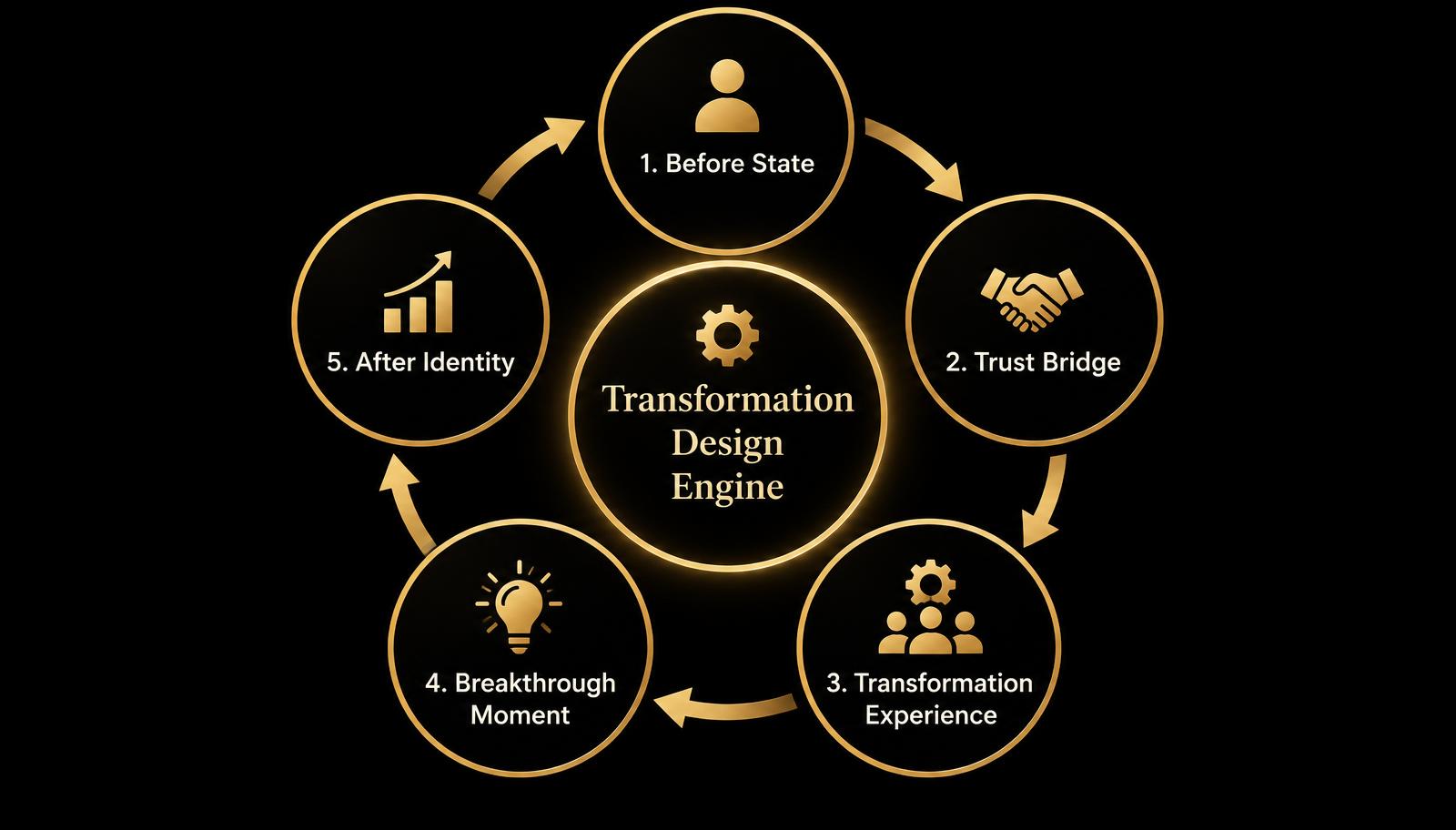
Stop asking "What should I add to my programme?" Start asking "What should my client experience at each stage?"
How to Measure Coaching Client Experience
Clients remember specific moments
"I'll never forget that conversation we had" tells you more than a generic "great programme" testimonial.
Clients use your language
When clients repeat your concepts in their own lives, your ideas have moved beyond the session.
Clients celebrate small wins
Excitement about progress before the final goal means the journey itself is rewarding.
Clients stay connected
Updates months later, shared milestones and recommendations show a lasting connection.
Referrals become more specific
"She's a good coach" describes a service. "Working with her changed how I approach this" describes a transformation.
You Don't Need More Content. You May Need Better Design.
When a programme underperforms, the instinct is to add another workbook, bonus, video or call. But the problem is often a lack of clarity, poor sequencing, too much complexity or a missing milestone. Before adding anything, ask: "Would this improve the transformation, or simply increase the amount of material?"
A Simple Coaching Experience Audit
Map one programme from beginning to end and answer:
- Before: how does the client feel before they start?
- Onboarding: what is their first experience after joining?
- Trust: when do they first see evidence that change is possible?
- Progress: where is their first meaningful win?
- Breakthrough: where are the likely moments of deeper realisation?
- Recognition: how do you acknowledge progress?
- Between sessions: what supports transformation outside the calls?
- Completion: how do you help them recognise what changed?
- After: what remains once the coaching ends?
Want help turning this audit into a premium offer? Map it live with us inside the 1 Crore Coach Plan free workshop.

The Real Product of Coaching
Sessions, frameworks and worksheets are components. The deeper product is transformation, and transformation is experienced. Two coaches with similar expertise can create completely different journeys. The one where the client feels understood, supported, challenged and capable of seeing themselves differently is the one that is hard to forget.
Final Thoughts
Great coaching is about the journey surrounding the session: the welcome, the first win, the difficult conversation, the breakthrough, the celebration and the identity the client carries forward. As information becomes easier to access, coaches have an opportunity to offer what information alone cannot: a thoughtfully designed human experience.
Clients may forget Slide 27. But they remember the moment they finally saw themselves differently.
Ready to build a coaching business around transformations like this? Reserve your free seat in the 1 Crore Coach Plan workshop.
Frequently Asked Questions
What is coaching client experience?
Coaching client experience is the complete experience a client has with you before, during and after a coaching programme: how they discover you, onboarding, support between sessions, milestones, breakthroughs, the ending and aftercare.
Why does client experience matter in coaching?
Clients can access information anywhere and compare coaches easily. Expertise still matters, but the experience surrounding it is what clients remember, talk about and recommend, making it a key differentiator.
How can I improve my coaching client experience?
Map your client journey from discovery to aftercare. Design a strong welcome, create early wins, recognise milestones, support clients between sessions and build a deliberate completion moment that helps them see how they have changed.
What is the 5-Part Transformation Design Engine?
It is a way to review a coaching programme through five stages: Before State, Trust Bridge, Transformation Experience, Breakthrough Moments and After Identity. It shifts the question from what to add to what the client should experience at each stage.
How do you measure coaching client experience?
Look for observable signals: clients remember specific moments, use your language, celebrate small wins, stay connected after the programme and give specific, transformation-focused referrals.
Where can I learn to build a high-ticket coaching business around a great client experience?
Join Gopal Krishnan's free 1 Crore Coach Plan workshop to learn the niche, offer, client journey and systems used by India's top coaches.
Build your ₹1 Crore coaching business with the 1 Crore Coach Plan
Learn the niche, offer, content and AI systems that let you scale without doing every task yourself. Free seat, limited slots.
Reserve My Free Seat